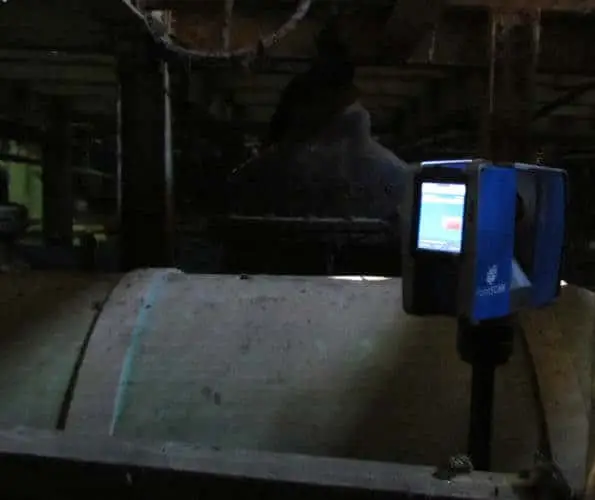
Understanding 3D Laser Scanning in Confined Spaces.
Confined spaces present some of the highest safety and accessibility challenges in engineering and construction. Using 3D laser scanning, PointSCAN captures accurate, measurable data from these environments without putting personnel at risk. Modern digital surveying methods make it possible to record every structural surface from outside the space, supporting inspection, refurbishment, and asset management.
Our confined space surveys are planned in accordance with the UK Confined Spaces Regulations, ensuring all hazards—oxygen deficiency, gas build-up, liquids, dust, and restricted egress—are identified and controlled before any work begins.
Regulations and Compliance: HSE, DSEAR, ATEX & COMAH
Hazardous and explosive atmospheres are tightly regulated under several UK and European frameworks designed to protect both personnel and assets. These include the Dangerous Substances and Explosive Atmospheres Regulations (DSEAR), the ATEX Directives, and the Control of Major Accident Hazards (COMAH) Regulations. Together, they establish how work must be assessed, authorised, and executed in environments where flammable gases, vapours, dust, or stored chemicals may pose a risk of explosion or release.
PointSCAN’s survey teams operate under full HSE, DSEAR, ATEX, and COMAH awareness, ensuring every project meets statutory requirements and site-specific safety standards. Where necessary, intrinsically safe or non-sparking equipment is deployed, and in certain conditions, certified scanners such as the Z+F IMAGER® 5010EX enable safe data capture in Zone 1 and Zone 2 hazardous areas. Each survey is supported by comprehensive Risk Assessment and Method Statements (RAMS), atmospheric monitoring, and coordination with site safety management to maintain complete regulatory compliance throughout the operation.
So what defines a confined space?
A confined space is defined by the Health & Safety Executive as “a place which is substantially enclosed (though not always entirely), and where serious injury can occur from hazardous substances or conditions within the space or nearby.”
Many different industries also categorise confined spaces within their sites depending upon their access and egress restrictions, oxygen levels and other potential gases and in some cases the risk of an inflow of a liquid or solid or even dust. Despite the name however, confined spaces are not always small enclosed areas.
First rule for confined space entry:
AVOID IT
Minimising Risk Through Remote Scanning
Where possible, confined space entry is avoided entirely. Using purpose-built rigs, tripods, and winch systems, PointSCAN can lower a laser scanner into a chamber, culvert, or tank while operating it remotely from the surface. This technique removes the need for personnel entry and eliminates exposure to hazardous atmospheres.
Even when entry is unavoidable, scanners can often be positioned, activated, and monitored from outside the hazard zone. This reduces time spent within confined areas and ensures compliance with the first rule of confined space safety: Avoid entry wherever possible.
In fact this is stated in The Confined Spaces Regulations 1997 and suggests that designers and project teams either find alternative ways of completing tasks or make physical changes to an environment which can reduce or declassify the area concerned.
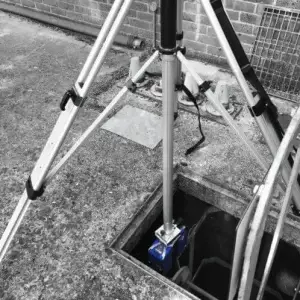
How to obtain accurate 3D laser surveys in hazardous areas.
Every industry may view the risks associated with confined space differently and require alternative entry procedures. Understandably all will insist that to make an entry into a confined space you must have the appropriate training. As such, training providers such as ESS-Safeforce and Develop Training offer courses that certificate an individual for 2 – 3 years before having to retake.
With confined space entries being routinely undertaken by certified persons on a daily basis throughout the UK, they still remain a potentially high risk to any project safety programme and financial obligations. However, having attended such courses over the past 20 years, there is one overriding rule that has always been given that everyone should abide by.
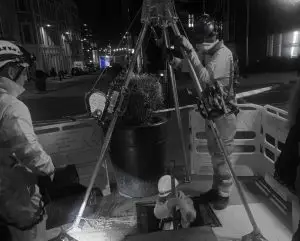
Industries follow Approved Codes Of Practice (ACOP) instructions issued by the HSE and industry safety teams and complete risk assessments to manage their assets accordingly.
However, it still remains that confined spaces and hazardous areas exist within our industries and even to make the suggested changes it would be necessary to undertake an entry. Although there is now a possible alternative solution that can reduce the associated risk.
Where an area is significantly larger and entry is required, it is still possible to set up the scanner and leave the confined space before remotely operating although it should be noted that this will extend the survey session considerably.
Should however it be necessary to complete the survey from within a controlled area, minimising the number of persons that enter contributes to reducing the overall risk assessment.
The greatest advantage of completing a 3D laser survey from within a confined space is in fact the data that it produces and the formats in which it can produce survey information.
Firstly, due to their nature a confined space is not always the most pleasant of environments, often with minimal or no lighting. Not a problem for a laser scanner as they produce their own light source and have no problems working in complete darkness.
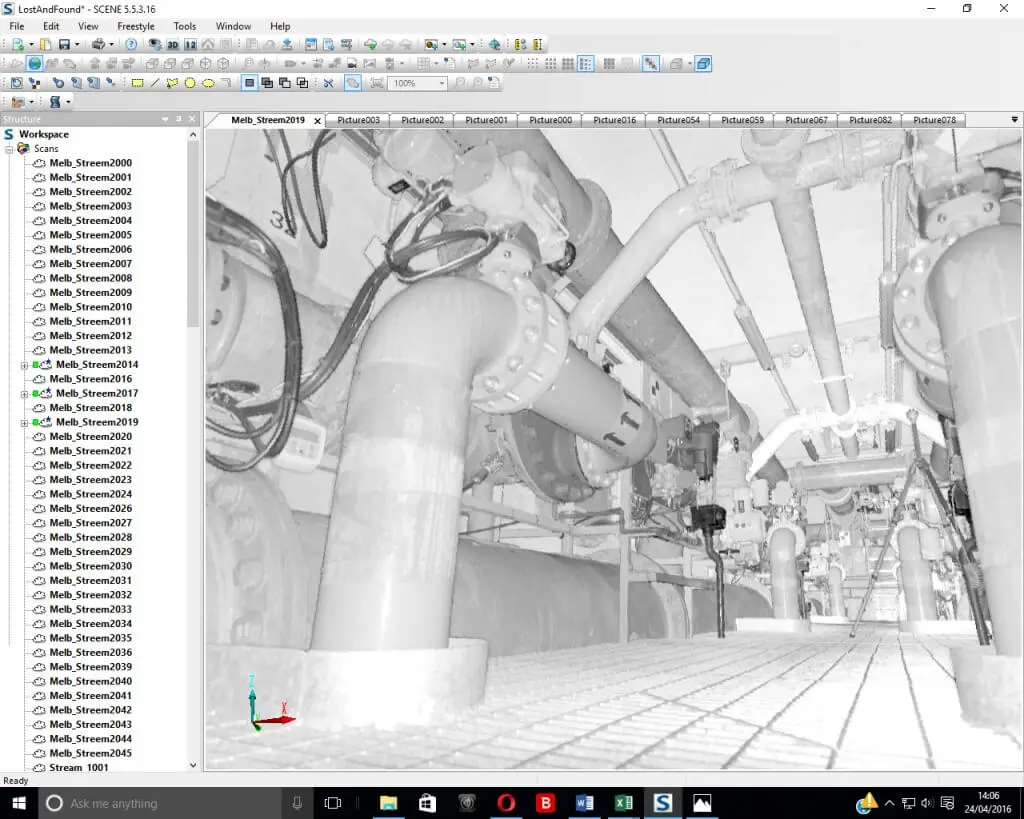
A point cloud created from the 3D laser survey makes it possible to view the confined space safely using standard software applications such as Faro SCENE or Autodesk Recap. Alternatively, you could generate a fly-through of the point cloud data or even immerse yourself in virtual reality.
Creating Virtual Environments
All of which allows anyone access to the restricted area without the need for specialist equipment or additional training. Therefore eliminating any further risk from making any further confined space entries during the design stage.
Furthermore, should the procedure for any alterations need to be examined, process development and any training for specific tasks can be completed in a virtual reality environment.
How to benefit from accurate 3D laser surveys in hazardous areas.
✅ Enhanced safety: Reduced need for physical entry and manual measurement.
✅ Comprehensive accuracy: Millimetre-level precision for geometry and alignment.
✅ Faster turnaround: Surveys completed up to 80% faster than traditional methods.
✅ Rich visual data: High-density point clouds and photo textures for analysis.
✅ Better communication: Shared 3D models improve coordination across teams.
By combining digital precision with safety-first methodology, PointSCAN helps clients plan, design, and manage assets more efficiently while meeting all regulatory requirements.
If you have found this article to be of interest please share it with others. If you would like more information on 3D laser scanning in confined spaces or hazardous areas, please contact us using the link below.

PointSCAN Limited
www.pointscan.co.uk