
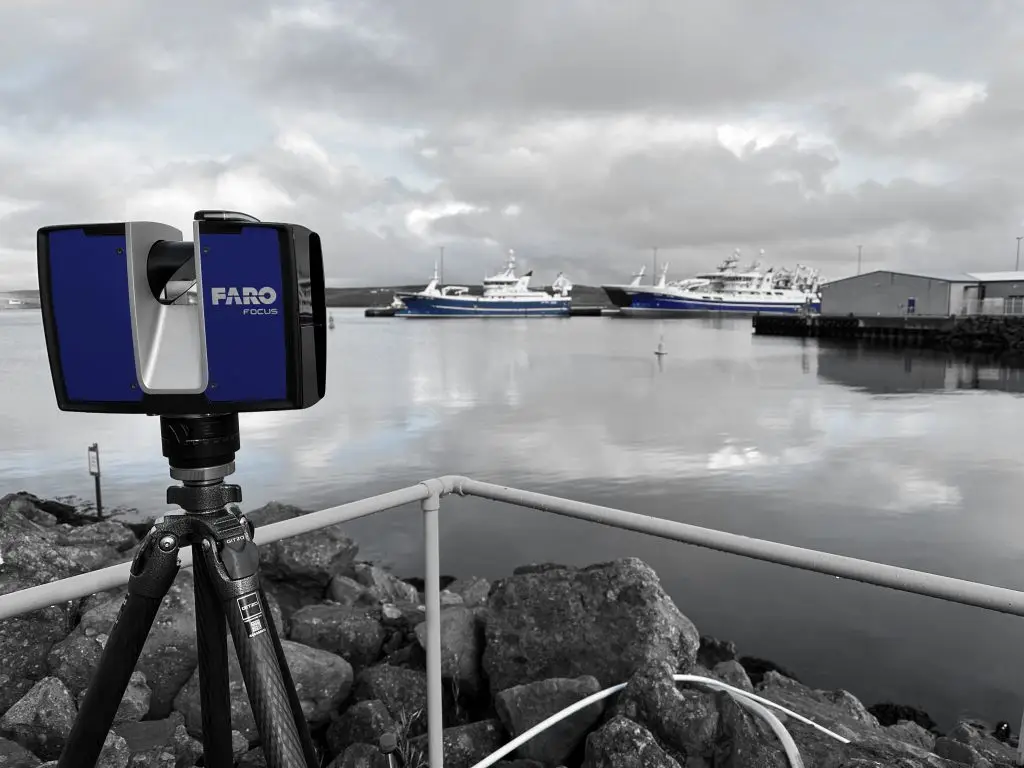
3D laser scanning is an advanced technology that captures the precise shape and size of physical objects or environments by using laser light to create accurate digital 3D representations. This method involves projecting laser beams onto the surface of an object and measuring the time it takes for the laser to reflect back to the scanner, allowing for the creation of a detailed 3D model. The technology has revolutionised various fields, including engineering, manufacturing, construction, and cultural heritage preservation, by providing an efficient and accurate way to capture spatial data.
Basic Principles
3D laser scanning operates on the principles of triangulation and time-of-flight.
Triangulation: This method involves projecting a laser beam onto an object and capturing the reflection with a sensor. By calculating the angle of reflection and the distance between the scanner and the object, the exact location of a point on the object’s surface can be determined. This process is repeated across the entire surface to generate a comprehensive 3D model.
Time-of-Flight: This technique sends a laser pulse towards the object and measures the time it takes for the pulse to return. Using the speed of light, the distance is calculated. This method is especially useful for scanning large objects or expansive areas.
Types of 3D Laser Scanners
Several types of 3D laser scanners exist, each suited to different applications:
Handheld 3D Scanners: Portable and user-friendly, these scanners are ideal for scanning small to medium-sized objects. They are commonly used in healthcare for creating precise models of body parts for prosthetics or orthotics.
Terrestrial Laser Scanners: Larger scanners typically mounted on tripods, used for scanning buildings, landscapes, and other large structures. They are essential in construction, architecture, and urban planning.
Aerial Laser Scanners: Mounted on drones or aircraft, these scanners map large areas from above. They are used in geographic information systems (GIS), agriculture, forestry, and environmental monitoring.
Structured Light Scanners: Combining laser and optical technologies, these scanners project light patterns onto an object and capture the deformations with cameras. This method is highly accurate and used in quality control and reverse engineering.
Applications
The applications of 3D laser scanning are extensive and varied. Here are some key areas where this technology is making a significant impact:
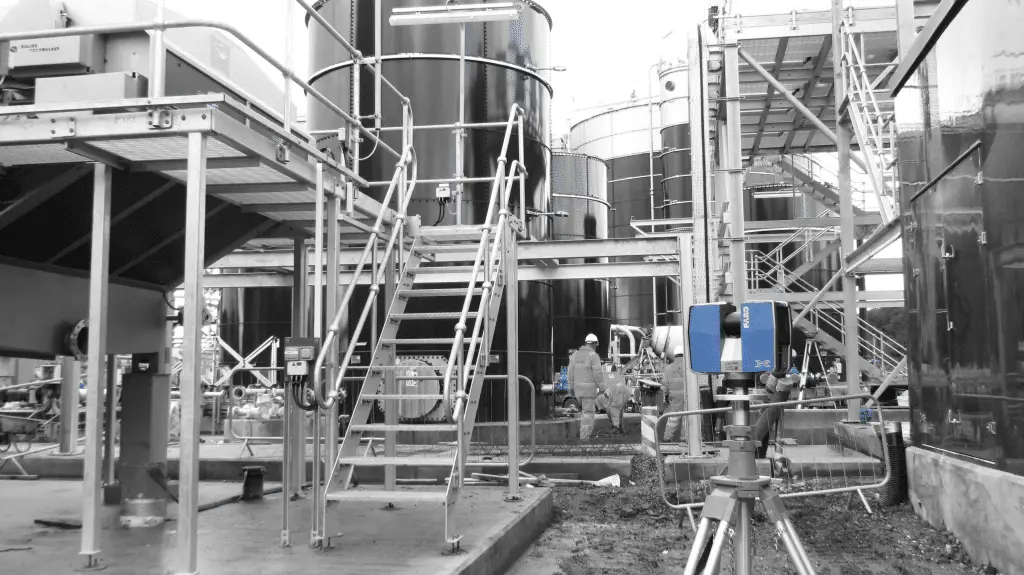
Architecture and Construction: 3D laser scanning is transforming the design and construction of buildings. Detailed 3D models of existing structures allow architects and engineers to plan renovations and new constructions with greater accuracy. This technology helps identify structural issues, ensuring modifications are safe and compliant with regulations.
Manufacturing and Quality Control: In manufacturing, 3D laser scanning is used to inspect parts and assemblies to ensure they meet design specifications. It facilitates rapid prototyping and reverse engineering, where existing parts are scanned to create accurate digital models for reproduction or modification.
Cultural Heritage Preservation: 3D laser scanning is invaluable for preserving historical sites and artifacts. Detailed scans create permanent digital records of fragile or deteriorating objects, enabling researchers to study them without causing damage. It also aids in the restoration of these artifacts by providing accurate references.
Healthcare: In the medical field, 3D laser scanning creates custom prosthetics and orthotics. Scans of patients’ body parts allow for the production of devices that fit perfectly, improving comfort and functionality. It is also used in reconstructive surgery planning and forensic reconstruction.
Geospatial and Environmental Monitoring: Aerial and terrestrial laser scanning create topographical maps and monitor environmental changes. This is critical for urban planning, disaster management, and studying ecological systems.

Advantages
3D laser scanning offers numerous advantages over traditional measurement and surveying methods:
Accuracy and Precision: The technology provides highly accurate measurements, capturing details often missed by manual methods. This precision is crucial in fields like aerospace and automotive manufacturing, where tolerances are extremely tight.
Speed: 3D laser scanning can capture millions of data points per second, significantly reducing the time required for surveying and measurement tasks. This efficiency is particularly beneficial in large-scale projects.
Non-Contact Measurement: Since 3D laser scanners do not require physical contact with the object being measured, they can scan delicate or hazardous objects without risk of damage or danger to operators.
Comprehensive Data Capture: The ability to capture complete surface data ensures no details are missed, providing a thorough and holistic view of the object or area being scanned.
Versatility: With various types of scanners available, 3D laser scanning can be applied to a wide range of objects and environments, from small mechanical parts to large landscapes.
Challenges
Despite its many advantages, 3D laser scanning also faces some challenges:
Cost: High-quality 3D laser scanners can be expensive, making them less accessible for smaller businesses or projects with limited budgets.
Data Management: The vast amounts of data generated by 3D laser scanning require robust storage and processing capabilities. Managing, analysing, and interpreting this data can be complex and time-consuming.
Environmental Factors: Scanning accuracy can be affected by environmental conditions such as lighting, weather, and the reflectivity of the object’s surface. These factors need to be controlled or compensated for to ensure accurate results.
Learning Curve: Effective use of 3D laser scanning technology requires specialised knowledge and training. Users must be proficient in operating the equipment and processing the data to produce meaningful results.
Future Trends
The future of 3D laser scanning looks promising, with advancements expected to enhance its capabilities and accessibility:
Improved Accuracy and Speed: Continued technological advancements will likely result in even more accurate and faster scanning systems, making them suitable for an even broader range of applications.
Integration with Other Technologies: Combining 3D laser scanning with other technologies, such as augmented reality (AR) and artificial intelligence (AI), will enable more sophisticated data analysis and visualisation, opening up new possibilities in fields like construction and healthcare.
Cost Reduction: As technology advances and becomes more widespread, the cost of 3D laser scanners is expected to decrease, making them more accessible to smaller enterprises and individual users.
Expanded Applications: As awareness of the benefits of 3D laser scanning grows, new applications will emerge in fields such as entertainment, sports, and retail, further expanding its impact.

PointSCAN Limited: A Leader in 3D Laser Scanning
One of the prominent companies specialising in 3D laser scanning technology is PointSCAN Limited. PointSCAN Limited provides comprehensive 3D laser scanning services that cater to various industries. Their expertise lies in capturing detailed and accurate spatial data, which is crucial for informed decision-making in projects ranging from construction to heritage conservation.
Services Offered by PointSCAN Limited
Building Information Modelling (BIM): PointSCAN Limited excels in creating precise BIM models, which are essential for modern construction and renovation projects. These models facilitate better planning, coordination, and execution by providing a detailed digital representation of the building.
Heritage and Conservation: Recognising the importance of preserving cultural heritage, PointSCAN Limited offers services to scan and document historical sites and artifacts. Their high-resolution scans ensure that these irreplaceable assets are digitally preserved for future generations.
Industrial and Manufacturing Applications: PointSCAN Limited provides scanning services for quality control and reverse engineering in the industrial sector. By creating accurate digital models of parts and assemblies, they help manufacturers maintain high standards and streamline production processes.
Topographical Surveys: Utilising aerial and terrestrial laser scanning, PointSCAN Limited conducts topographical surveys that are crucial for urban planning, environmental monitoring, and infrastructure development. Their detailed maps and models aid in effective project planning and execution.

Advantages of Choosing PointSCAN Limited
- Expertise and Experience: With a team of highly skilled professionals, PointSCAN Limited brings a wealth of knowledge and experience to every project, ensuring accurate and reliable results.
- State-of-the-Art Technology: PointSCAN Limited uses the latest 3D laser scanning technology to deliver high-quality data capture and processing, ensuring clients receive the best possible outcomes.
- Customized Solutions: Understanding that each project is unique, PointSCAN Limited offers tailored solutions to meet the specific needs of their clients, providing a personalised approach to every project.
- Comprehensive Support: From initial consultation to final delivery, PointSCAN Limited offers comprehensive support throughout the project lifecycle, ensuring seamless execution and client satisfaction.
In conclusion, 3D laser scanning is a transformative technology that offers unparalleled precision and efficiency in capturing the physical world in digital form. Its applications span numerous industries, providing critical benefits in terms of accuracy, speed, and data comprehensiveness. Companies like PointSCAN Limited are at the forefront of this technological revolution, offering specialized services that leverage the power of 3D laser scanning to deliver exceptional results. As the technology continues to evolve, 3D laser scanning will undoubtedly play a key role in shaping the way we design, build, preserve, and understand the world around us.
Interested in having your project 3D modelled? Feel free to contact us by clicking the button below.