
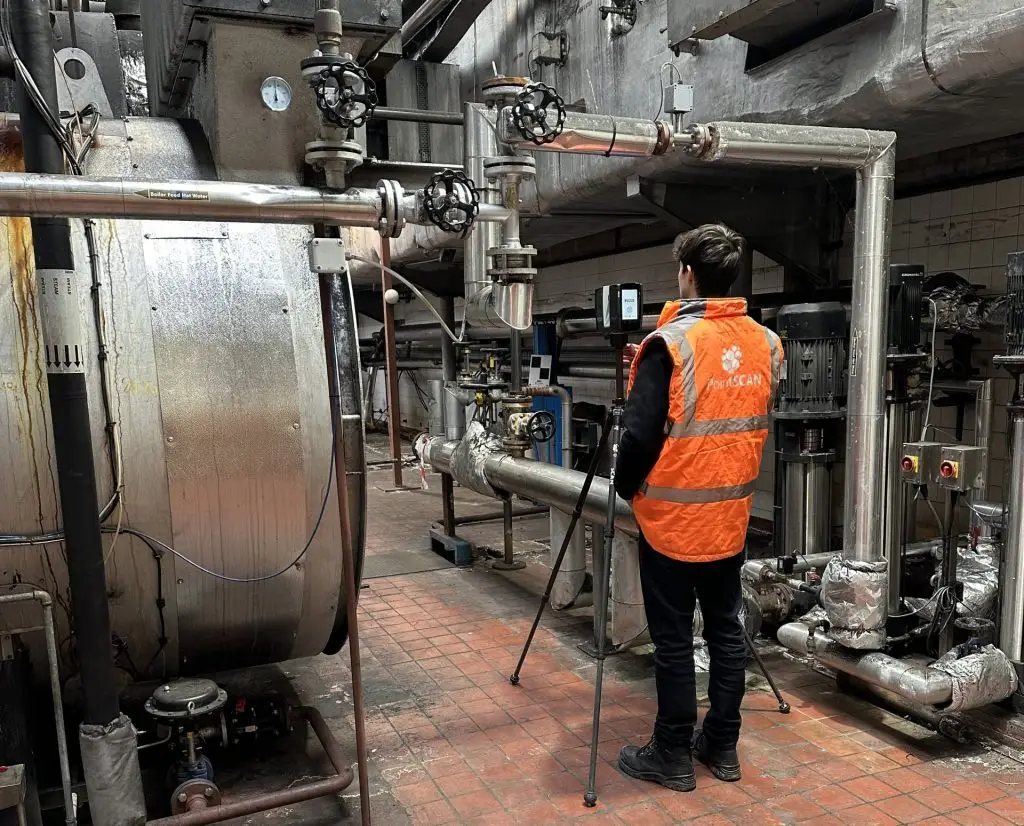
Operating a 3D laser scanner involves specialised training that covers various technical, theoretical, and practical aspects. This training ensures that users can efficiently and safely use the equipment to capture accurate 3D data. Here is a comprehensive overview of the kind of training needed to operate a 3D laser scanner.
Introduction to 3D Laser Scanning
Basics of 3D Scanning: Training begins with an introduction to the fundamental principles of 3D laser scanning. This includes understanding how laser scanning works, the types of 3D laser scanners (such as terrestrial, handheld, and airborne), and their applications in different industries like construction, manufacturing, archaeology, and forensics.
Components and Features: Trainees learn about the various components of a 3D laser scanner, including the laser emitter, sensors, and rotating mirrors. They also get familiar with the scanner’s features, such as range, accuracy, resolution, and field of view.
Understanding Laser Scanning Technology
Laser Physics: A basic understanding of laser physics is essential. Trainees learn about the properties of lasers, including wavelength, coherence, and the interaction of laser beams with surfaces.
Data Acquisition: The training covers the principles of data acquisition, including how the scanner captures point clouds by emitting laser beams and measuring the time it takes for the beams to return after hitting a surface. Trainees also learn about factors affecting data quality, such as ambient light, surface reflectivity, and scanning distance.
Software Training
Scanner Software: Operating a 3D laser scanner involves using specialized software for scanner control and data processing. Training includes hands-on sessions with the software, teaching users how to set up scans, control the scanner, and manage data acquisition.
Point Cloud Processing: Once the data is captured, it needs to be processed. Trainees learn how to process point clouds using various software tools. This includes filtering noise, aligning multiple scans, and generating 3D models.
CAD Software: In many applications, 3D laser scan data is integrated with CAD software. Training covers how to import point cloud data into CAD programs, manipulate the data, and use it for design, analysis, or inspection purposes.
Practical Operation
Setting Up the Scanner: Hands-on training includes setting up the 3D laser scanner in different environments. This involves calibrating the scanner, ensuring it is level, and configuring scan parameters based on the specific requirements of the project.
Safety Procedures: Safety is crucial when operating a 3D laser scanner, especially considering the use of laser beams. Trainees learn about safety protocols, including the use of protective eyewear, ensuring the scanning area is clear of people, and understanding the safety classifications of lasers.
Field Scanning: Practical training includes field exercises where trainees set up and operate the scanner in real-world environments. This helps them understand the challenges of different scanning conditions, such as outdoor environments, large industrial sites, or confined spaces.

Data Management
Data Storage and Organisation: 3D laser scanning generates large volumes of data. Training includes best practices for data storage, organisation, and backup to ensure data integrity and accessibility.
Data Transfer: Trainees learn how to transfer data from the scanner to a computer or network. This involves understanding different data formats, using USB drives, SD cards, or wireless transfer methods.
Troubleshooting and Maintenance
Common Issues: Training covers common issues that may arise during scanning, such as data dropouts, misalignment, and calibration errors. Trainees learn troubleshooting techniques to quickly identify and resolve these problems.
Regular Maintenance: Maintaining the 3D laser scanner is crucial for its longevity and performance. Training includes regular maintenance procedures, such as cleaning the optics, updating firmware, and performing calibration checks.
Advanced Techniques
High-Resolution Scanning: For applications requiring high-resolution data, such as detailed architectural surveys or intricate part inspections, trainees learn techniques to achieve maximum scanner resolution and accuracy.
Integration with Other Technologies: Advanced training covers the integration of 3D laser scanning with other technologies, such as photogrammetry, GPS, and drones. This provides a comprehensive approach to data capture and enhances the capabilities of the scanning process.

Industry-Specific Training
Construction and BIM: For those in the construction industry, training includes how to use 3D laser scanning for Building Information Modeling (BIM). This involves creating accurate 3D models of construction sites, monitoring progress, and ensuring quality control.
Manufacturing and Quality Control: In manufacturing, training focuses on using 3D laser scanning for quality control and inspection. Trainees learn how to scan parts and assemblies, compare them to CAD models, and identify deviations or defects.
Heritage and Archaeology: For applications in heritage and archaeology, training includes techniques for scanning historical artifacts and sites, processing the data to create detailed records, and using the data for preservation and restoration projects.
Certification and Continuing Education
Certification Programs: Many institutions and organizations offer certification programs for 3D laser scanning. These programs validate the trainee’s skills and knowledge, providing credentials that can enhance their career prospects.
Continuing Education: Technology in the field of 3D laser scanning is constantly evolving. Continuing education ensures that operators stay up-to-date with the latest advancements, software updates, and best practices. This may involve attending workshops, online courses, and industry conferences.
Operating a 3D laser scanner requires a comprehensive training program that covers theoretical knowledge, practical skills, and safety procedures. By understanding the technology, mastering the software, and gaining hands-on experience, trainees can effectively use 3D laser scanners for a wide range of applications. Continuous learning and certification further ensure that operators remain proficient as technology advances.
Interested in learning more about 3D laser scanning or have a project that you would like modelled? Contact our team.