
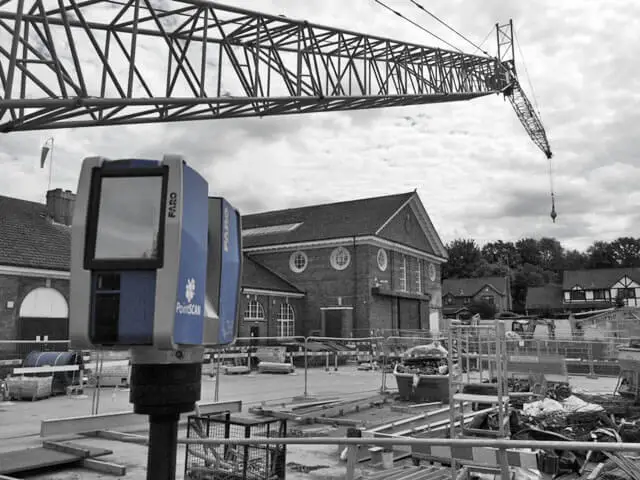
The advent of 3D laser scanning technology has brought about a transformative shift in the construction industry, enhancing the accuracy, efficiency, and overall quality of construction projects. This advanced technology utilises laser beams to capture detailed spatial data and create highly accurate three-dimensional models of physical structures and environments. Here, we explore the various ways 3D laser scanning is revolutionising construction projects, from planning and design to execution and maintenance.
Enhanced Accuracy and Precision
One of the most significant advantages of 3D laser scanning in construction is its unparalleled accuracy and precision. Traditional surveying methods often leave room for human error, leading to inaccuracies that can cause delays and additional costs. 3D laser scanning, however, captures millions of data points with sub-millimeter accuracy, ensuring that the measurements are precise. This high level of detail is crucial for creating accurate building information models (BIM), which are essential for planning, design, and construction.
Efficient Project Planning and Design
3D laser scanning provides comprehensive data that can be used to create detailed and accurate models of existing structures and sites. This data is invaluable during the planning and design phases of construction projects. Architects and engineers can use the precise 3D models to better understand the existing conditions, identify potential challenges, and develop more effective designs. This leads to improved decision-making and reduces the likelihood of costly design revisions.
Improved Collaboration and Communication
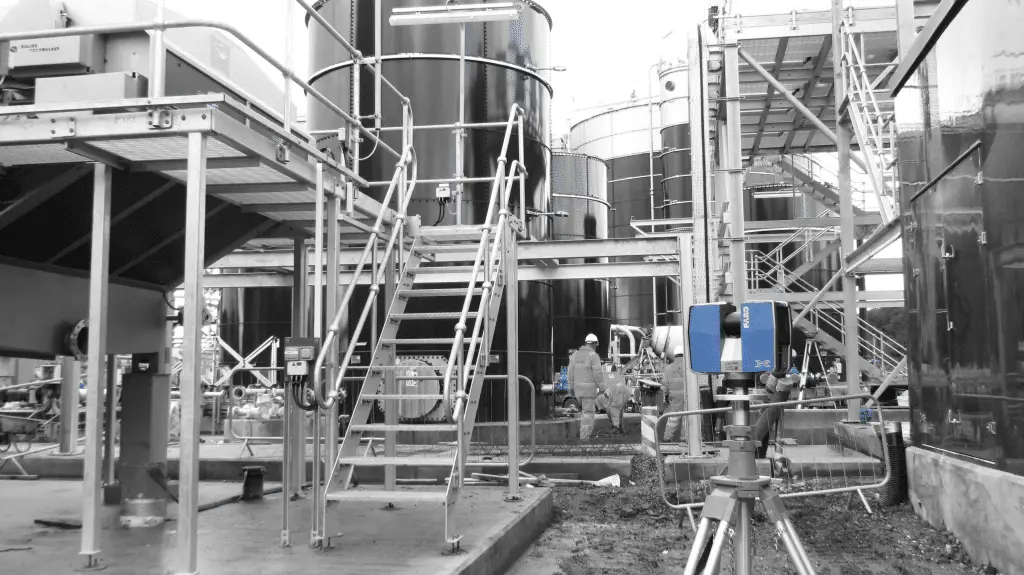
The detailed 3D models generated by laser scanning facilitate better collaboration among all stakeholders involved in a construction project. By providing a single source of truth, these models ensure that everyone has access to the same accurate information. This transparency enhances communication between architects, engineers, contractors, and clients, fostering a collaborative environment where issues can be identified and resolved more efficiently. Improved communication helps in aligning expectations and ensuring that the project progresses smoothly.
Time and Cost Savings
Time and cost efficiency are critical in construction projects, and 3D laser scanning significantly contributes to both. The speed at which laser scanners can capture data is much faster compared to traditional methods, allowing for rapid data collection. This reduces the time required for site surveys and accelerates the overall project timeline. Additionally, the high accuracy of the data minimises the risk of errors and rework, which are common sources of cost overruns. By reducing the need for corrective measures, 3D laser scanning helps in controlling project budgets.
Enhanced Safety
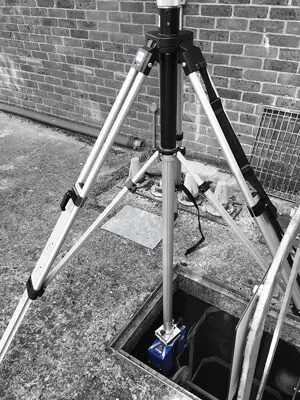
Construction sites can be hazardous, and ensuring the safety of workers is a top priority. 3D laser scanning enhances safety by reducing the need for personnel to physically access dangerous or hard-to-reach areas for measurements. The scanners can capture data from a distance, minimising the risk of accidents and injuries. Moreover, the detailed models can be used to plan and execute construction activities more safely by identifying potential hazards and implementing appropriate safety measures.
Quality Control and Assurance
Maintaining high-quality standards throughout a construction project is essential for its success. 3D laser scanning plays a vital role in quality control and assurance by providing accurate and detailed records of the construction progress. The scanned data can be compared with the design models to ensure that the construction is proceeding as planned. Any deviations from the design can be quickly identified and corrected, ensuring that the project meets the required specifications and standards.
Improved Facility Management and Maintenance
The benefits of 3D laser scanning extend beyond the construction phase and into the lifecycle of the building. The detailed 3D models serve as a valuable asset for facility management and maintenance. These models provide accurate information about the building’s structure, systems, and components, which can be used for routine maintenance, renovations, and upgrades. Facility managers can use the data to make informed decisions, plan maintenance activities more effectively, and ensure the longevity of the building.
Applications in Renovation and Restoration
For renovation and restoration projects, 3D laser scanning is particularly beneficial. Existing buildings often have incomplete or outdated documentation, making it challenging to plan renovations accurately. 3D laser scanning can create precise as-built models of these structures, providing a detailed understanding of the current conditions. This information is crucial for planning renovations, ensuring that new additions or modifications are compatible with the existing structure. For historical buildings, laser scanning helps preserve important architectural details and ensures that restoration work respects the original design.

Integration with Other Technologies
3D laser scanning is highly compatible with other advanced technologies, such as Building Information Modelling (BIM), Virtual Reality (VR), and Augmented Reality (AR). Integrating these technologies enhances their individual capabilities and provides a more comprehensive solution for construction projects. For instance, combining 3D laser scanning with BIM allows for more detailed and accurate models, while VR and AR can be used to visualise and interact with the models in immersive ways. This integration fosters innovation and drives the construction industry towards more efficient and effective practices.
Environmental and Sustainability Benefits
Sustainability is becoming increasingly important in the construction industry. 3D laser scanning contributes to environmental sustainability by reducing waste and promoting resource efficiency. Accurate data and precise measurements ensure that materials are used efficiently, minimising waste during construction. Additionally, the ability to plan and execute projects more accurately reduces the need for rework and the associated environmental impact. By promoting sustainable practices, 3D laser scanning supports the construction industry’s efforts to reduce its environmental footprint.
In conclusion, 3D laser scanning is revolutionising the construction industry by enhancing accuracy, efficiency, and safety. Its ability to capture detailed spatial data with high precision improves project planning, design, and execution, leading to significant time and cost savings. The technology also fosters better collaboration and communication among stakeholders, ensures high-quality standards, and provides valuable information for facility management and maintenance. As the construction industry continues to embrace digital transformation, 3D laser scanning will play an increasingly important role in driving innovation and sustainability.
Interested in having your construction project 3D modelled? Contact us today to see how PointSCAN can enhance your project’s accuracy and efficiency.