
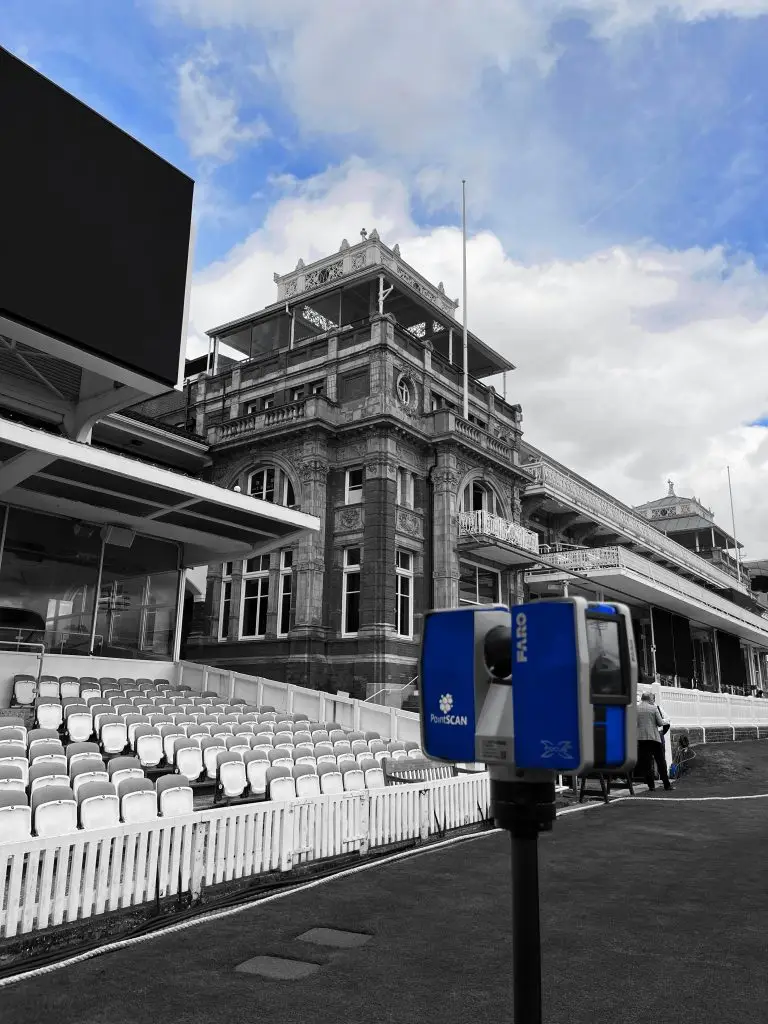
Lord’s Cricket Ground, often referred to as the “Home of Cricket”, is renowned as one of the world’s most iconic and historic sporting venues. Located in St John’s Wood, London, and owned by the Marylebone Cricket Club (MCC), it has been central to cricket’s evolution over more than two centuries. The ground has witnessed the rise of cricketing legends, the birth of rivalries, and the transformation of the sport from its early amateur days to the global professional game it is today. As part of its continuous evolution, significant redevelopment efforts are in place to modernise the ground while preserving its rich heritage. Among these are planned upgrades to the Tavern and Allen Stands, two key elements of the ground that have served spectators for many years.
History of Lord's Cricket Ground
Lord’s Cricket Ground was founded in 1814 by Thomas Lord, a professional cricketer and businessman who sought to establish a permanent home for the MCC. The MCC, formed in 1787, has been the custodian of the Laws of Cricket and a major influence in the game’s governance. Lord’s is actually the third ground established by Thomas Lord, after the first two locations in Dorset Fields and Lisson Grove proved unsuitable due to land disputes. The present site at St John’s Wood has remained the home of cricket ever since.
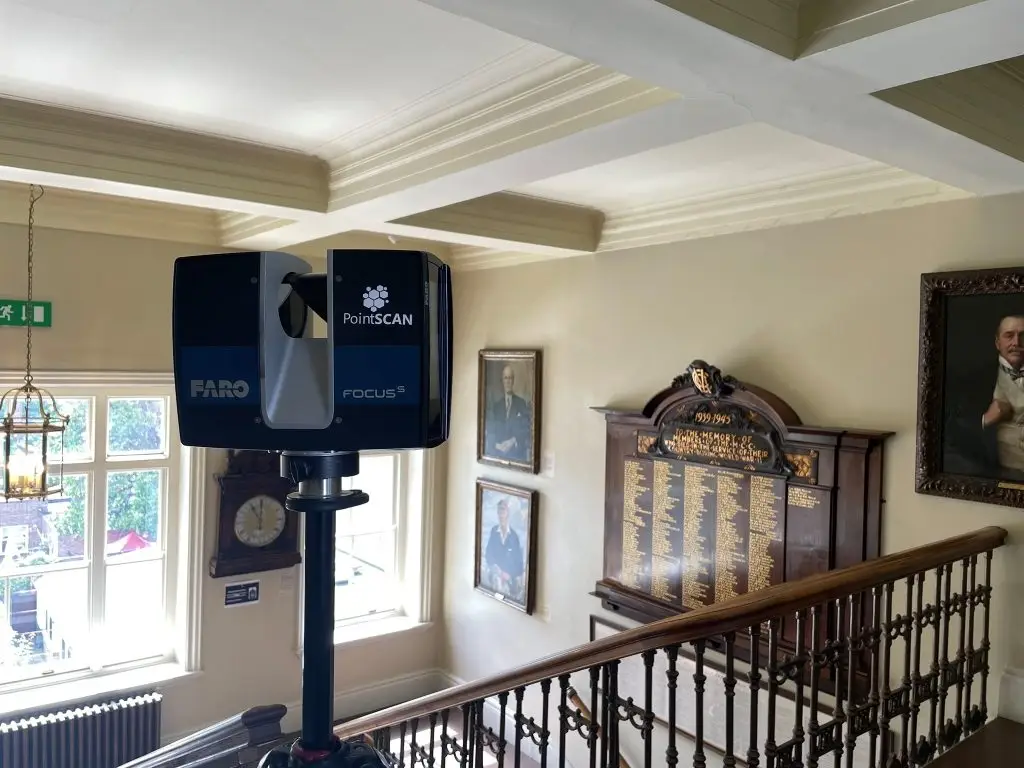
One of the ground’s most famous features is the Pavilion, built in 1889. This iconic structure houses the Long Room, through which players walk onto the field, and the dressing rooms, where many cricketing legends have prepared for their performances. The Pavilion is a symbol of tradition, where past and present come together in the sport’s most sacred surroundings.
Lord’s also features the unique slope, with a gradient that drops by 2.5 meters from one side of the pitch to the other. This has become an integral part of the ground’s character, affecting play in subtle but significant ways. Players and teams must adjust their strategies to cope with the slope, adding a layer of complexity to matches held at Lord’s.
The ground has been the setting for some of cricket’s most memorable moments, including numerous Ashes Tests and World Cup finals. Notably, Lord’s was the venue for the dramatic 2019 ICC Cricket World Cup final, where England won their first-ever World Cup in a thrilling match against New Zealand, which ended in a super over. This moment cemented Lord’s reputation as a stage for history-making events in the cricket world.
The Tavern Stand
The Tavern Stand is a prominent feature of Lord’s, positioned near the famous Lord’s Tavern, a popular gathering place for spectators. The Tavern itself, with its rich history, offers a mix of food, drink, and a place for fans to soak in the atmosphere of Lord’s. The stand, which is named after this historic establishment, has been a favourite among spectators due to its central location and easy access to facilities.
Over the years, the Tavern Stand has seen several refurbishments aimed at improving the spectator experience. It offers a variety of seating options that provide excellent views of the pitch and the surrounding structures, such as the Pavilion. This stand is a key part of the matchday experience at Lord’s, blending modern comforts with the ground’s deep-rooted traditions.
The Allen Stand
The Allen Stand is another vital part of Lord’s, named after Sir George Oswald Browning “Gubby” Allen, a former England captain and long-serving chairman of selectors for English cricket. Gubby Allen was an influential figure in the sport, and the stand that bears his name continues to honour his contributions to cricket.
The Allen Stand is situated adjacent to the Tavern Stand and forms part of the eastern side of the ground. Like the Tavern Stand, the Allen Stand has undergone numerous improvements over the years, enhancing spectator comfort while retaining the charm that makes Lord’s unique. The stand offers great views of the action on the field and remains a popular spot for fans attending matches at the ground.
Recent and Future Redevelopment at Lord’s
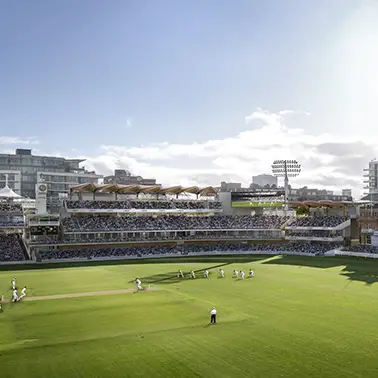
Lord’s is currently undergoing a significant transformation as part of the MCC’s long-term Masterplan, which aims to modernise the ground while respecting its historic character. The redevelopment efforts are focused on ensuring that Lord’s remains a world-class venue capable of hosting major international events, while also improving the experience for players, spectators, and visitors.
One of the most notable recent redevelopments was the complete reconstruction of the Compton and Edrich Stands. These two stands, located on the northern side of the ground, were rebuilt and opened in 2021. The new stands added around 2,600 additional seats, increasing the overall capacity of Lord’s to approximately 31,100. The redevelopment of these stands also included improvements in sightlines, accessibility, and facilities for spectators. The new stands are equipped with modern amenities, such as enhanced catering options and more comfortable seating, making them a significant upgrade from their predecessors.
The Compton and Edrich Stands were also designed with sustainability in mind. The MCC is committed to reducing Lord’s carbon footprint, and the new stands reflect this goal through the use of sustainable materials and energy-efficient technologies. This focus on sustainability is part of the broader Masterplan for Lord’s, which aims to make the ground not only a world-class sporting venue but also an environmentally responsible one.
The next phase of the Masterplan will focus on the redevelopment of the South-Western End of the ground, where the Tavern and Allen Stands are located. These stands are set to be refurbished and potentially expanded to bring them in line with the modernised northern stands. The redevelopment of the Tavern and Allen Stands will likely include improvements in seating capacity, sightlines, and spectator facilities. The MCC is also planning to enhance the hospitality and catering options within these stands, ensuring that fans have access to the best possible experience when attending matches at Lord’s.
The redevelopment of the Tavern and Allen Stands is expected to preserve the historic character of these structures while integrating modern amenities. This approach reflects the overall philosophy of the Lord’s Masterplan, which seeks to balance tradition with innovation. The goal is to ensure that Lord’s remains at the forefront of international cricket, capable of hosting the biggest events in the sport, while also retaining the unique charm that has made it the “Home of Cricket” for over 200 years.
Learn more about the future of Lord’s Cricket Ground and the development plan here.
PointSCAN's Role in Redevelopment
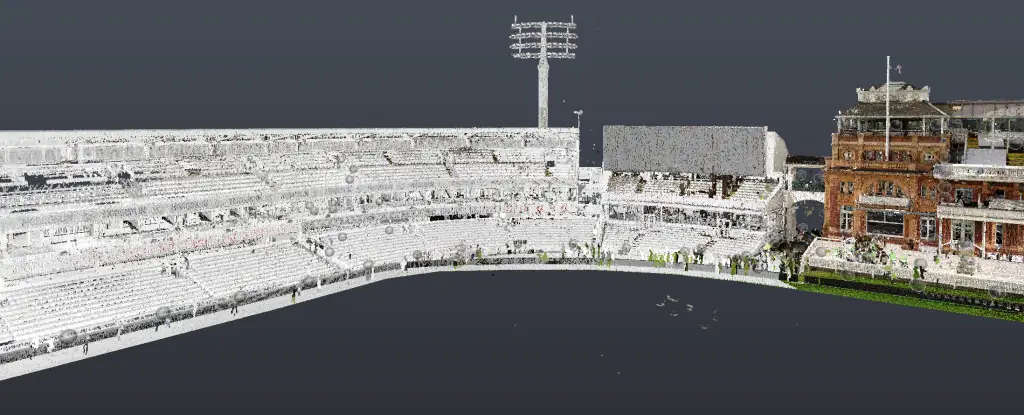
PointSCAN was employed to conduct 3D laser scans of the Tavern and Allen Stands, as well as the iconic Lord’s Pavilion, in preparation for major redevelopment works at Lord’s Cricket Ground. These detailed scans will play a crucial role in the planning process, allowing for the precise placement of monitoring equipment that will safeguard the historic elements of the ground during the demolition and construction phases. This advanced scanning technology ensures that the heritage of Lord’s is protected, while facilitating the necessary modernisation to keep the ground at the forefront of international cricket.
Lord’s Cricket Ground is a place where tradition and modernity come together in perfect harmony. The Tavern and Allen Stands, key parts of the ground’s structure, have served spectators for many years and are now set to be part of the next phase of the MCC’s ambitious redevelopment plan. As these stands are modernised, they will continue to play an important role in the matchday experience at Lord’s, ensuring that fans can enjoy the best that cricket has to offer in one of the sport’s most historic settings.
An integral part of this redevelopment is the use of advanced 3D scanning technology, employed to protect the heritage of Lord’s while facilitating its modernisation. PointSCAN’s 3D laser scans of the Tavern and Allen Stands, as well as the Pavilion, allow for meticulous planning and monitoring throughout the redevelopment process. This technology enables the precise placement of protective measures, ensuring that the historic elements of the ground are safeguarded during construction. Beyond Lord’s, 3D scanning plays a crucial role in the development of historical sites, offering unparalleled accuracy in documenting structures and identifying potential risks. This technology allows for sensitive upgrades and modifications without compromising the integrity of the original architecture.
The redevelopment of Lord’s is about more than just improving the physical infrastructure of the ground; it is about ensuring that the spirit of the game continues to thrive in the 21st century. The MCC’s Masterplan reflects a deep respect for cricket’s history and traditions, while also embracing the future. By balancing these elements, with the help of cutting-edge technologies like 3D scanning, the MCC is ensuring that Lord’s will remain the “Home of Cricket” for generations to come.
Have a project that requires modelling? No job is too big or small for PointSCAN. Enquire by clicking the button below.