
How Shared Deployment Reduces ATEX Survey Costs
Undertaking surveys within hazardous environments is significantly more complex than standard engineering surveys. Facilities such as wastewater treatment works, chemical processing plants, and oil and gas installations frequently contain areas classified under ATEX regulations where explosive gases or vapours may be present. In these environments, specialist equipment and trained personnel are required to ensure surveys can be completed safely.
As a result, ATEX 3D laser scanning projects often involve higher mobilisation costs than conventional surveys. However, one effective strategy for improving efficiency and reducing costs is the use of a shared deployment programme. By coordinating multiple survey projects within a defined time period and geographic area, specialist survey teams can maximise equipment utilisation while reducing overall mobilisation costs for individual clients.
Why ATEX Surveys Are More Expensive
Surveys in hazardous environments require specialist technology and strict safety procedures that do not apply to conventional surveying activities. These additional requirements introduce several cost factors, including:
- ATEX-certified survey equipment
- Highly trained hazardous-area engineers
- Site-specific safety procedures and permit systems
- Detailed risk assessments and method statements
- Extended mobilisation planning and logistics
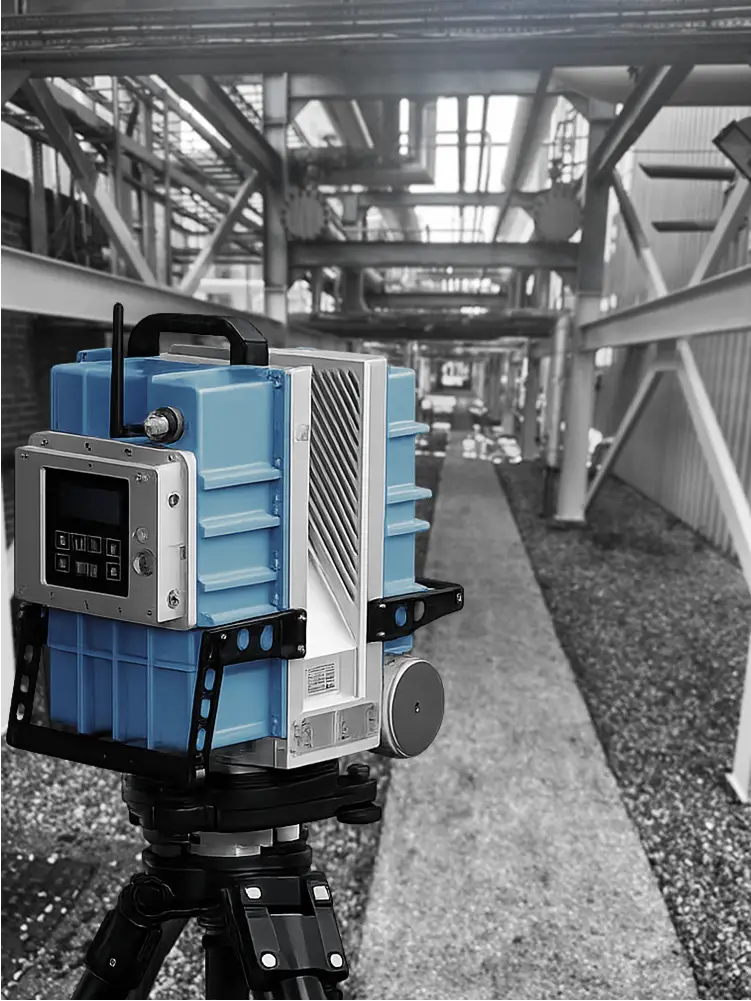
Equipment such as the Z+F IMAGER® 5006EX, the world’s only ATEX-certified terrestrial laser scanner, is specifically designed for use within explosive environments. Operating this equipment also requires engineers trained in hazardous-area safety procedures and industrial working environments.
Because of these requirements, a significant portion of the cost of an ATEX survey is associated with mobilising specialist equipment and personnel to site, rather than the scanning process itself.
Understanding Mobilisation Costs
For many hazardous-area survey projects, mobilisation represents one of the largest cost components. Mobilisation includes the time and resources required to deploy specialist equipment and personnel to the project location.
Typical mobilisation elements include:
- Transport of ATEX-certified equipment
- Travel and accommodation for the survey team
- Site safety inductions and permit approvals
- Pre-survey planning and risk assessments
If a survey team is mobilised for a single project, these costs must be absorbed entirely by that individual client. However, when several projects are scheduled within the same timeframe and region, the same mobilisation can support multiple surveys.
What Is Shared Deployment?
A shared deployment programme is a structured survey schedule in which several projects are grouped together during the same deployment period. Rather than mobilising specialist scanning equipment separately for each client, the survey team completes multiple surveys during the same operational programme.
This approach creates efficiencies by:
- Reducing repeated travel and mobilisation
- Maximising utilisation of specialist scanning equipment
- Improving scheduling efficiency for hazardous-area engineers
- Distributing mobilisation costs across multiple projects
Importantly, this approach does not reduce the technical quality of the survey. Each project is still completed using the same equipment, methodology, and engineering standards.
Maximising Equipment Utilisation
Specialist ATEX laser scanners are designed for high-precision industrial measurement but are typically deployed only when hazardous-area surveys are required. As a result, the equipment may otherwise remain unused between individual projects.
Shared deployment programmes improve efficiency by ensuring the equipment and survey team remain operational throughout the deployment period. Multiple surveys can be completed sequentially across different sites, allowing the scanner to be used continuously rather than intermittently.
This improves operational efficiency while allowing mobilisation costs to be shared between several projects.
Geographic Coordination
Another key benefit of shared deployment is geographic scheduling. Hazardous-area surveys are often required across large infrastructure networks such as water treatment facilities, industrial plants, or energy installations.
By coordinating surveys within the same geographic region, survey teams can move efficiently between sites during a single deployment programme. This reduces travel time and improves overall operational efficiency.
For organisations responsible for multiple facilities, such as water utilities or industrial asset operators, this approach can significantly improve the cost-effectiveness of survey programmes.
Maintaining Engineering Standards
Cost savings achieved through shared deployment are the result of logistical efficiency rather than reduced survey quality. Each project is still undertaken using:
- Certified ATEX laser scanning equipment
- Experienced hazardous-area survey engineers
- Full compliance with site safety procedures
- Engineering-grade survey and data capture methods
The point cloud data, modelling outputs, and engineering deliverables remain identical to those produced through a traditional single-project mobilisation.
Improving Efficiency in Hazardous-Area Surveys
ATEX 3D laser scanning has become an essential tool for capturing accurate data within hazardous industrial environments. However, the specialist equipment and operational procedures required mean mobilisation costs can represent a significant portion of project budgets.
Shared deployment programmes provide a practical solution. By coordinating multiple surveys within the same deployment period and geographic area, survey teams can maximise equipment utilisation and distribute mobilisation costs across several projects.
The result is greater efficiency without compromising safety or technical quality, allowing organisations to obtain the detailed digital survey data required for engineering design, asset management, and infrastructure upgrades in hazardous environments.
Learn more about PointSCAN’s specialist 3D laser scanning services for complex industrial and hazardous environments.
Speak to one of our team on 01767 661400 or click the link below