
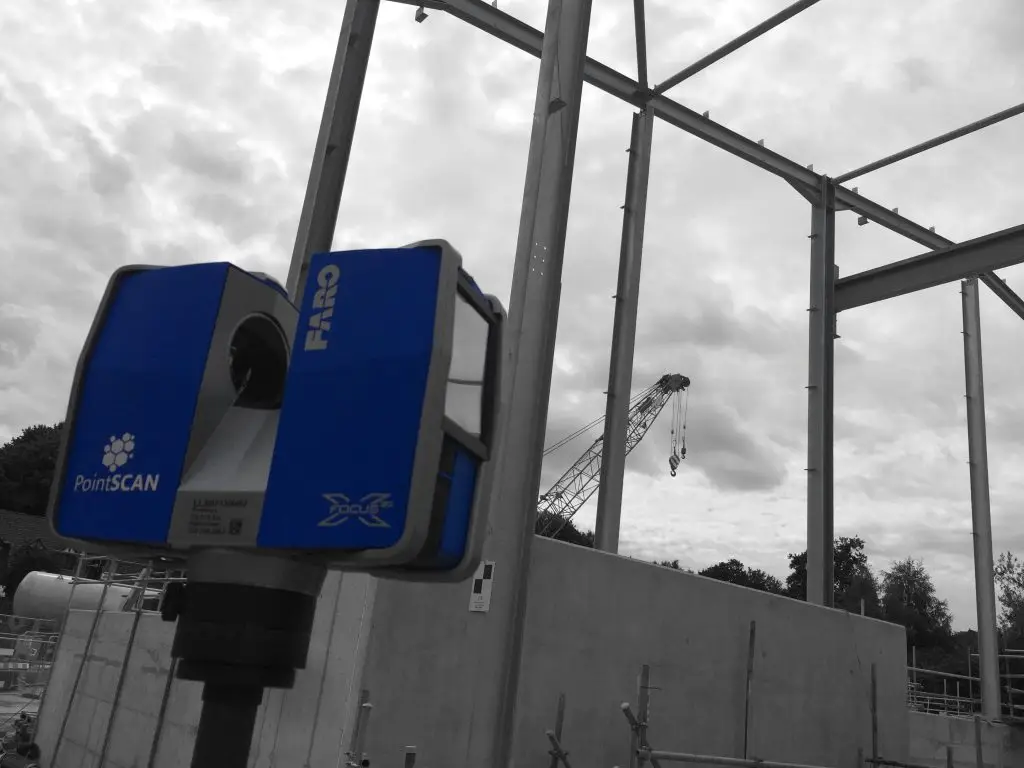
The construction industry is inherently fraught with risks and hazards, making safety a paramount concern. Traditional methods of surveying and site inspection often fall short in mitigating these risks comprehensively. However, the advent of 3D laser scanning technology has revolutionized the industry, significantly enhancing safety protocols and reducing the incidence of accidents. This essay explores how 3D laser scanning contributes to improved safety in construction through precise data collection, risk mitigation, improved planning, and enhanced training and communication.
Precision in Data Collection
One of the primary benefits of 3D laser scanning is its ability to collect highly accurate and detailed data about a construction site. Traditional surveying methods can be time-consuming and prone to human error, which may lead to inaccuracies that compromise safety. In contrast, 3D laser scanners capture millions of data points in a short period, creating an exact digital replica of the physical environment. This precision allows for the identification of potential hazards that may not be visible to the naked eye. For instance, structural weaknesses, uneven surfaces, and spatial conflicts can be detected early, allowing for timely intervention and corrective measures.
Risk Mitigation
By providing a detailed and accurate representation of the construction site, 3D laser scanning helps in identifying and mitigating risks before they escalate. The technology allows safety managers to conduct thorough inspections of the site without the need for physical presence in potentially dangerous areas. For example, scans can reveal unstable ground conditions or areas with high potential for falling debris. This enables the implementation of appropriate safety measures, such as shoring up weak structures or cordoning off hazardous zones, thus preventing accidents and injuries.
Improved Planning and Design
3D laser scanning plays a crucial role in the planning and design phases of construction projects. By offering a comprehensive view of the site’s current conditions, the technology helps architects and engineers design structures that align perfectly with the existing environment. This reduces the likelihood of design errors that could lead to safety issues during construction. Additionally, accurate site models facilitate better logistical planning, ensuring that materials and equipment are stored and moved safely. For example, knowing the exact dimensions and layout of a site can help in planning safe pathways for the movement of heavy machinery, thereby reducing the risk of collisions and accidents.
Enhanced Monitoring and Inspection
Ongoing monitoring and inspection are vital for maintaining safety throughout the construction process. 3D laser scanning allows for continuous and real-time monitoring of the site, providing up-to-date information on its condition. This is particularly beneficial for tracking changes and identifying new hazards as they arise. Regular scans can be compared to detect any deviations from the original plan, such as subsidence or unexpected structural shifts, enabling prompt corrective action. This continuous monitoring ensures that safety standards are maintained consistently, minimising the risk of accidents.
Training and Communication
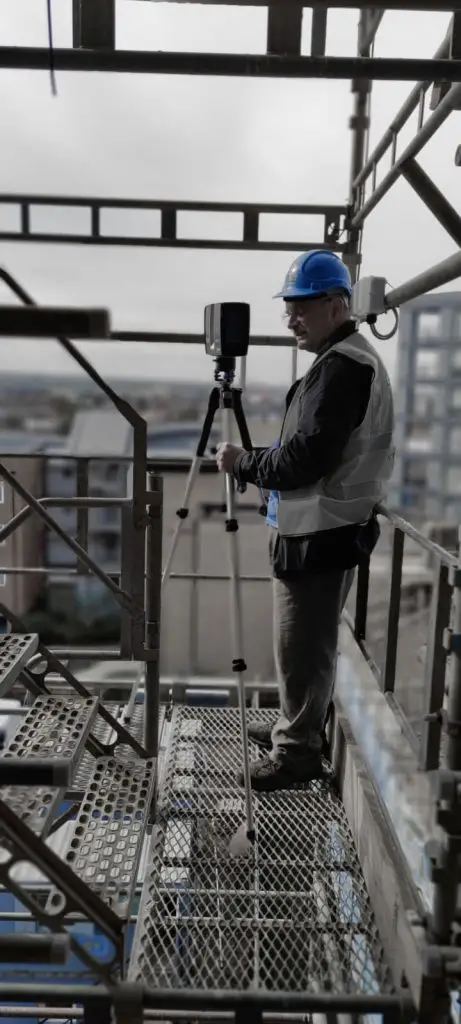
Effective communication and training are essential components of a robust safety culture in construction. 3D laser scanning enhances both by providing clear and visual representations of the site. Detailed 3D models and simulations can be used to train workers on potential hazards and safe practices. These visual aids make it easier for workers to understand complex safety protocols and procedures, leading to better compliance. Furthermore, 3D models can be shared among all stakeholders, including project managers, safety officers, and workers, ensuring that everyone is on the same page regarding safety measures. This improved communication fosters a collaborative approach to safety, with everyone actively participating in hazard identification and mitigation.
Case Study: Real-World Application
A practical example of the benefits of 3D laser scanning in construction safety can be seen in the renovation of the Sydney Opera House. During the renovation, 3D laser scanning was used to create detailed models of the existing structure. These models revealed structural weaknesses and spatial constraints that were not apparent through traditional surveying methods. As a result, the construction team was able to plan and execute the renovation more safely, avoiding potential structural failures and ensuring the safety of workers.
Another case study involves the construction of the Crossrail project in London. Here, 3D laser scanning was employed extensively to monitor tunnel construction. The technology provided real-time data on tunnel alignment and ground conditions, allowing engineers to detect and address issues such as ground movement and water ingress promptly. This proactive approach significantly reduced the risk of tunnel collapse and ensured the safety of the construction crew.
Future Implications
The adoption of 3D laser scanning in construction is likely to increase as the technology becomes more accessible and affordable. Future advancements may include the integration of 3D scanning with other technologies, such as Building Information Modelling (BIM) and artificial intelligence (AI). This integration could further enhance safety by enabling predictive analysis of potential hazards and automating the identification of risks. For instance, AI algorithms could analyse 3D scan data to predict structural weaknesses or equipment failures, allowing for preventive maintenance and reducing the likelihood of accidents.
In conclusion, 3D laser scanning has emerged as a powerful tool for enhancing safety in construction. Its ability to provide precise and comprehensive data, coupled with its applications in risk mitigation, planning, monitoring, and training, makes it invaluable in reducing the incidence of accidents and injuries. As the technology continues to evolve, it promises to bring even greater improvements to construction safety, ensuring that workers can operate in a safer and more secure environment. The construction industry, traditionally plagued by safety challenges, stands to benefit immensely from the widespread adoption of 3D laser scanning, heralding a new era of innovation and safety.
Ensure safety and precision in your construction projects with our 3D modelling services. Click the button below to learn how our technology can help you identify potential hazards and streamline your project from start to finish.