
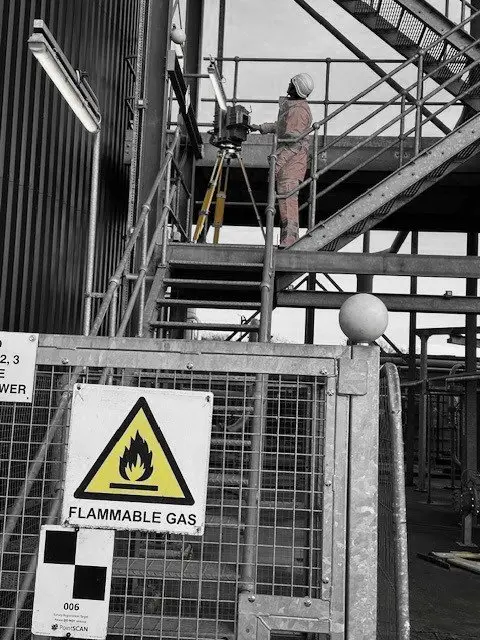
Planning Laser Surveys in Hazardous Industrial Environments
Industrial facilities such as water and wastewater treatment works, chemical processing plants, fuel storage terminals and energy infrastructure often contain environments where flammable gases, vapours or combustible substances may be present. These conditions introduce additional safety considerations when undertaking survey work.
At the same time, many of these facilities require accurate data to support engineering upgrades, maintenance programmes and plant modifications. 3D laser scanning has become one of the most effective technologies for capturing highly detailed survey information within complex industrial infrastructure.
When surveys are required within hazardous environments, careful planning is essential to ensure that work can be completed safely while maintaining operational continuity. A structured planning process helps survey teams manage risk, coordinate with site operations and capture the required data efficiently.
Understanding the Site Environment
Effective survey planning begins with gaining a thorough understanding of the facility in which the work will be carried out. Industrial plants often contain complex layouts with multiple process areas, restricted access locations and operating machinery.
Before a survey begins, it is important to review available site information such as:
- plant layout drawings
- process area maps
- access routes and restricted areas
- existing survey control networks
- operational constraints within the facility
Site walkthroughs with operational or engineering staff are often invaluable at this stage. These discussions help identify areas that may present safety risks, as well as locations where access may need to be carefully managed.
Understanding how the facility operates also allows the survey team to plan scanning activities around critical processes or operational restrictions.
Selecting Suitable Survey Equipment
The choice of equipment is another important consideration when planning surveys in hazardous industrial environments. Survey instruments must be suitable for the conditions present on site and must not introduce unnecessary risk.
Factors influencing equipment selection may include:
- electrical safety considerations
- environmental conditions such as moisture or dust
- available access space for equipment deployment
- stability of scanning locations
In some situations, specialised scanning equipment designed for hazardous environments may be required. For example the Z+F IMAGER 5006EX has been specifically engineered for use within challenging industrial environments where additional safety controls are necessary.
Selecting appropriate equipment ensures that survey work can be carried out safely while maintaining the accuracy required for engineering applications.
Risk Assessment and Method Statements
A comprehensive risk assessment is a fundamental part of planning any survey work within an industrial facility. The purpose of this process is to identify potential hazards associated with both the site environment and the survey activities themselves.
Typical considerations may include:
- working near operating machinery
- restricted or confined access areas
- working at height
- slip or trip hazards
- interaction with operational plant or infrastructure
The results of this assessment are normally documented within a method statement, which outlines the planned survey procedures and the safety measures that will be implemented.
These documents provide a clear framework for how the survey will be carried out and ensure that all personnel involved in the work understand the associated risks and control measures.
Coordinating with Site Operations
Industrial facilities often operate continuously, with complex systems running throughout the site. Survey work must therefore be carefully coordinated with operational teams to ensure that scanning activities do not interfere with normal plant operations.
This coordination may involve:
- scheduling work during appropriate operational windows
- establishing safe access routes through the facility
- working under site permit systems
- coordinating with site safety officers or engineering teams
Early communication with site personnel is critical. By involving operations teams in the planning process, survey work can often be carried out more efficiently while maintaining safe working conditions.
Optimising Scan Coverage
Efficient scan planning helps reduce the amount of time spent working within potentially hazardous environments. By carefully selecting scanner locations and planning coverage in advance, survey teams can capture the required data while minimising on-site exposure.
This typically involves:
- pre-planning scan locations using site drawings
- positioning scanners to maximise coverage from each setup
- integrating scans with existing control networks
- ensuring adequate overlap between scan positions
Effective scan planning improves both safety and efficiency, while ensuring the resulting dataset provides the level of detail required for engineering analysis.
Defining Data Requirements
Clear communication with the client or engineering team is also essential during the planning stage. Understanding the intended use of the survey data helps ensure that the appropriate level of detail is captured during the survey.
Laser scanning data may be used for a wide range of applications, including:
- engineering design
- retrofit planning
- plant modelling
- asset documentation
- clash detection analysis
Defining these requirements early in the project helps ensure that scan resolution, coverage and accuracy are aligned with the needs of the final deliverables.
Supporting Safe Industrial Surveys Through Proper Planning
Planning laser surveys within hazardous industrial environments requires a structured and carefully managed approach. Understanding the site layout, selecting appropriate equipment and undertaking thorough risk assessments are all essential elements of the planning process.
By coordinating closely with site operations and optimising scan coverage, survey teams can capture accurate digital data while maintaining safe working practices within complex industrial facilities.
When properly planned and executed, laser scanning provides a powerful method for documenting industrial infrastructure and supporting engineering projects in environments where safety and operational continuity are critical.
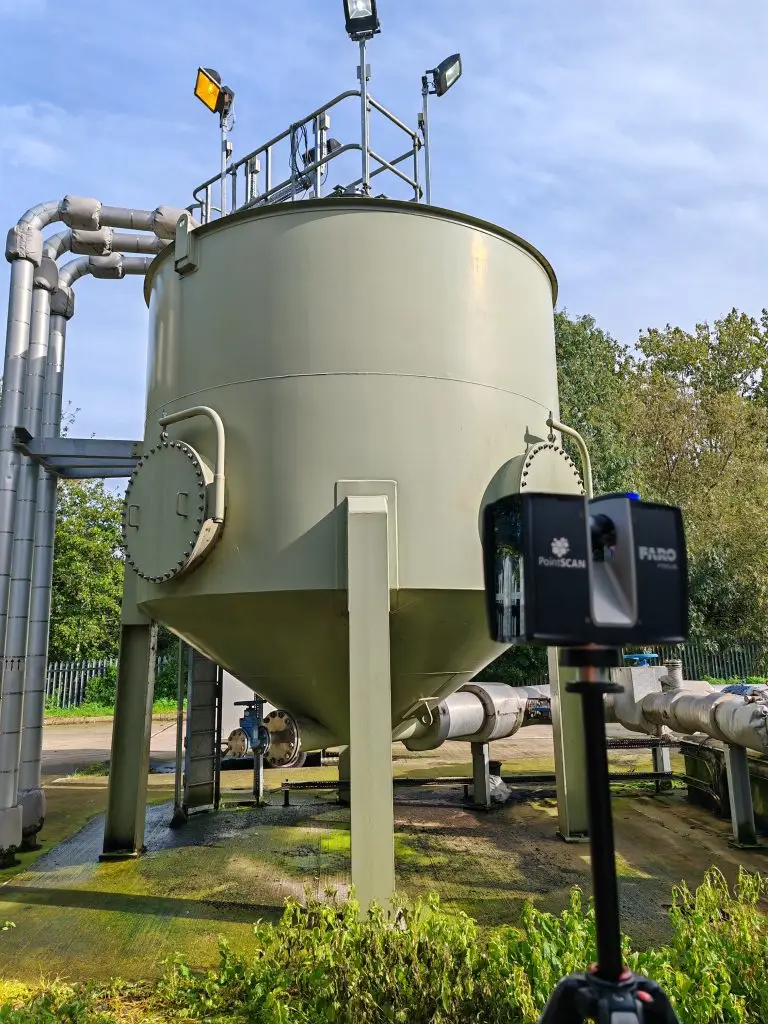
Give us a call on 01767 661400 or click the link below to learn more about PointSCAN’s specialist 3D laser scanning services for complex industrial and hazardous environments.