
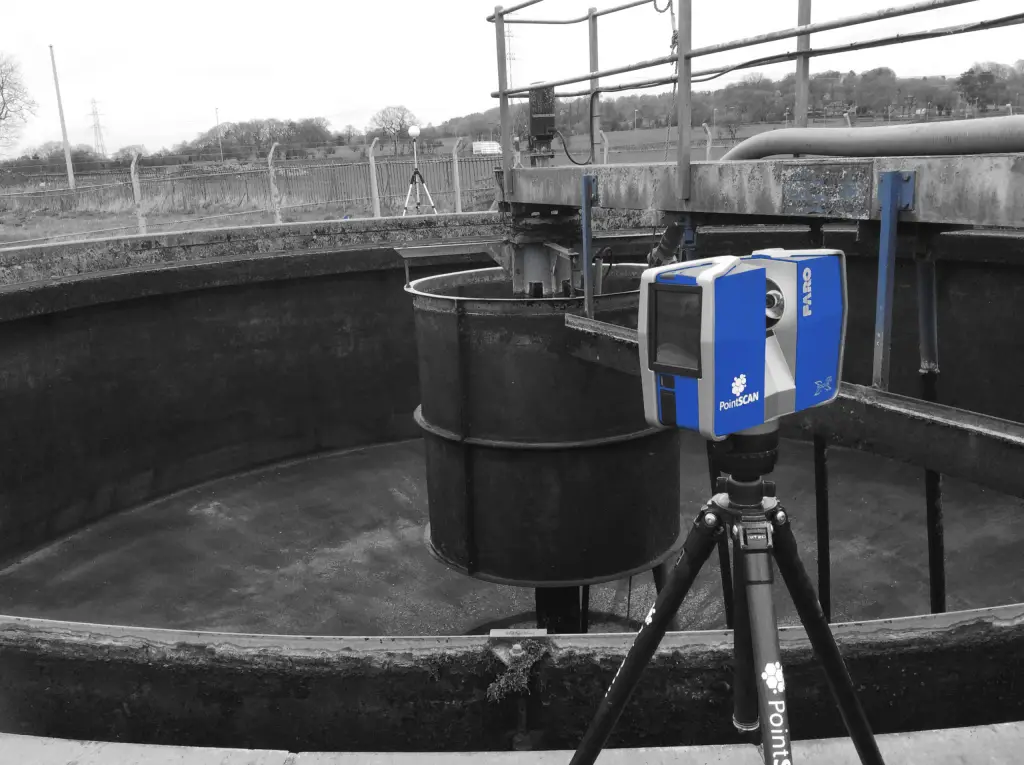
3D laser scanning technology, which captures detailed and precise measurements of objects and environments, has seen widespread adoption across various industries. This technology offers high accuracy, speed, and flexibility, enabling professionals to capture data for numerous applications. Below, we explore some of the key industries leveraging 3D laser scanning and its transformative impact.
1. Construction and Architecture
3D laser scanning is a game-changer in the construction and architecture industry. It is used to create accurate 3D models of buildings and construction sites, allowing architects and engineers to visualise and plan projects more effectively. Scanning can capture the precise dimensions of existing structures, aiding in renovations, retrofits, and expansions. This technology also helps in detecting structural issues early, ensuring that projects are completed on time and within budget.
For instance, building information modelling (BIM) relies heavily on data from 3D laser scans to create digital representations of physical and functional characteristics of places. This integration enhances collaboration among stakeholders, reduces errors, and improves overall project outcomes.

2. Manufacturing and Engineering
In the manufacturing and engineering sectors, 3D laser scanning is essential for quality control and reverse engineering. Manufacturers use it to inspect and measure parts and products, ensuring they meet precise specifications. The high accuracy of laser scanning allows for the detection of even the smallest deviations from design, which is crucial for maintaining product quality and consistency.
Reverse engineering, another critical application, involves using 3D scans to create digital models of existing parts or products. This process is invaluable for producing replacement parts, improving designs, and conducting competitive analyses. By digitising physical objects, companies can innovate and refine their products more efficiently.
3. Healthcare and Medicine
The healthcare industry utilises 3D laser scanning for various applications, including orthopaedics, prosthetics, and surgery planning. Custom prosthetic and orthotic devices can be designed using detailed scans of patients’ limbs, ensuring a perfect fit and improved comfort. In surgical planning, 3D models of patients’ anatomy derived from scans help surgeons to plan and practice complex procedures, reducing risks and improving outcomes.
Additionally, dental professionals use 3D laser scanning to create precise models of teeth for crowns, bridges, and aligners, enhancing the accuracy and efficiency of dental treatments.
4. Heritage and Archaeology
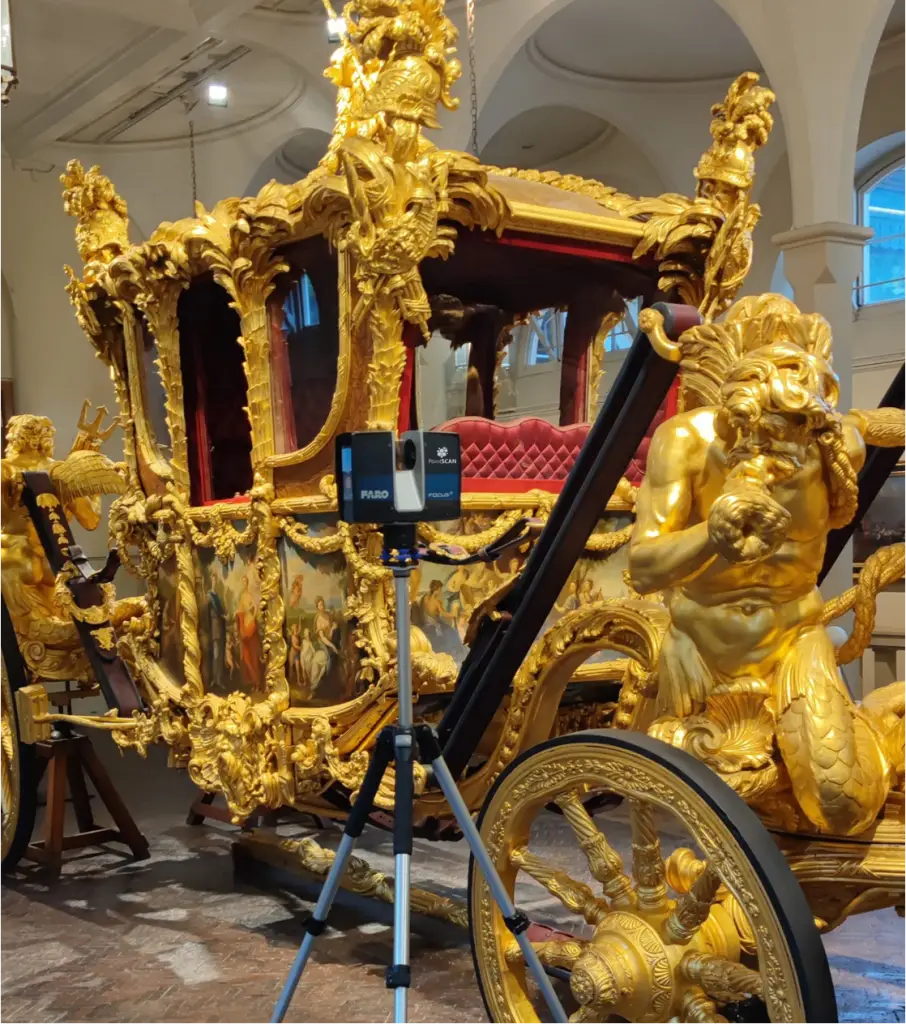
Preserving historical sites and artifacts is another critical application of 3D laser scanning. Archaeologists and conservators use this technology to capture detailed records of artifacts, monuments, and sites. These digital records can be used for research, restoration, and public education.
3D laser scanning enables the creation of accurate replicas of historical objects, allowing museums to display copies while preserving the originals. It also assists in documenting sites that are at risk of damage or destruction, ensuring that valuable cultural heritage is preserved for future generations.
5. Entertainment and Media
The entertainment industry, particularly in film and video game production, benefits immensely from 3D laser scanning. This technology is used to create detailed 3D models of characters, objects, and environments, enhancing the realism and visual appeal of digital content. For example, movies often use 3D scans of actors to create lifelike digital doubles for special effects and stunts.
In video game development, 3D laser scanning helps in creating immersive environments and realistic character models, improving the gaming experience. This technology also plays a role in virtual reality (VR) and augmented reality (AR) applications, where accurate 3D models are crucial for creating believable virtual worlds.
6. Automotive and Aerospace
Both the automotive and aerospace industries rely on 3D laser scanning for design, manufacturing, and maintenance processes. In automotive design, 3D scans of clay models and prototypes enable designers to refine shapes and features digitally. This data is also used to inspect and ensure the quality of manufactured components, leading to higher precision and reliability.
In aerospace, 3D laser scanning is vital for inspecting aircraft components and assemblies. It helps in detecting wear and damage, ensuring that maintenance and repairs are performed accurately. The technology is also used in the reverse engineering of aircraft parts, facilitating the production of replacement components and the enhancement of existing designs.
7. Oil and Gas
The oil and gas industry uses 3D laser scanning for various applications, including the maintenance and inspection of pipelines, refineries, and offshore platforms. Scanning technology allows for the precise measurement of complex structures, helping engineers to identify potential issues and plan maintenance activities.
For example, in pipeline inspection, 3D laser scanning can detect deformations, corrosion, and other anomalies that may compromise the integrity of the pipeline. This proactive approach to maintenance reduces downtime and enhances safety.
8. Real Estate
In real estate, 3D laser scanning is used to create virtual tours and accurate floor plans of properties. Potential buyers and tenants can explore properties remotely, saving time and increasing convenience. This technology also aids in property management, renovation planning, and historical preservation of buildings.
9. Forensics and Law Enforcement
Law enforcement agencies and forensic experts use 3D laser scanning to document crime scenes and accidents. The detailed 3D models produced by laser scans provide a comprehensive and accurate record of the scene, which can be used for analysis and in court presentations. This technology helps in preserving crucial evidence and reconstructing events with a high degree of accuracy.

3D laser scanning is a versatile and powerful tool that has found applications in a wide range of industries. Its ability to capture highly accurate and detailed data makes it invaluable for tasks ranging from design and manufacturing to healthcare and heritage preservation. As technology continues to advance, we can expect even broader adoption and innovative uses of 3D laser scanning across various fields.
Looking to have your project 3D modelled? Enquire below with PointSCAN.